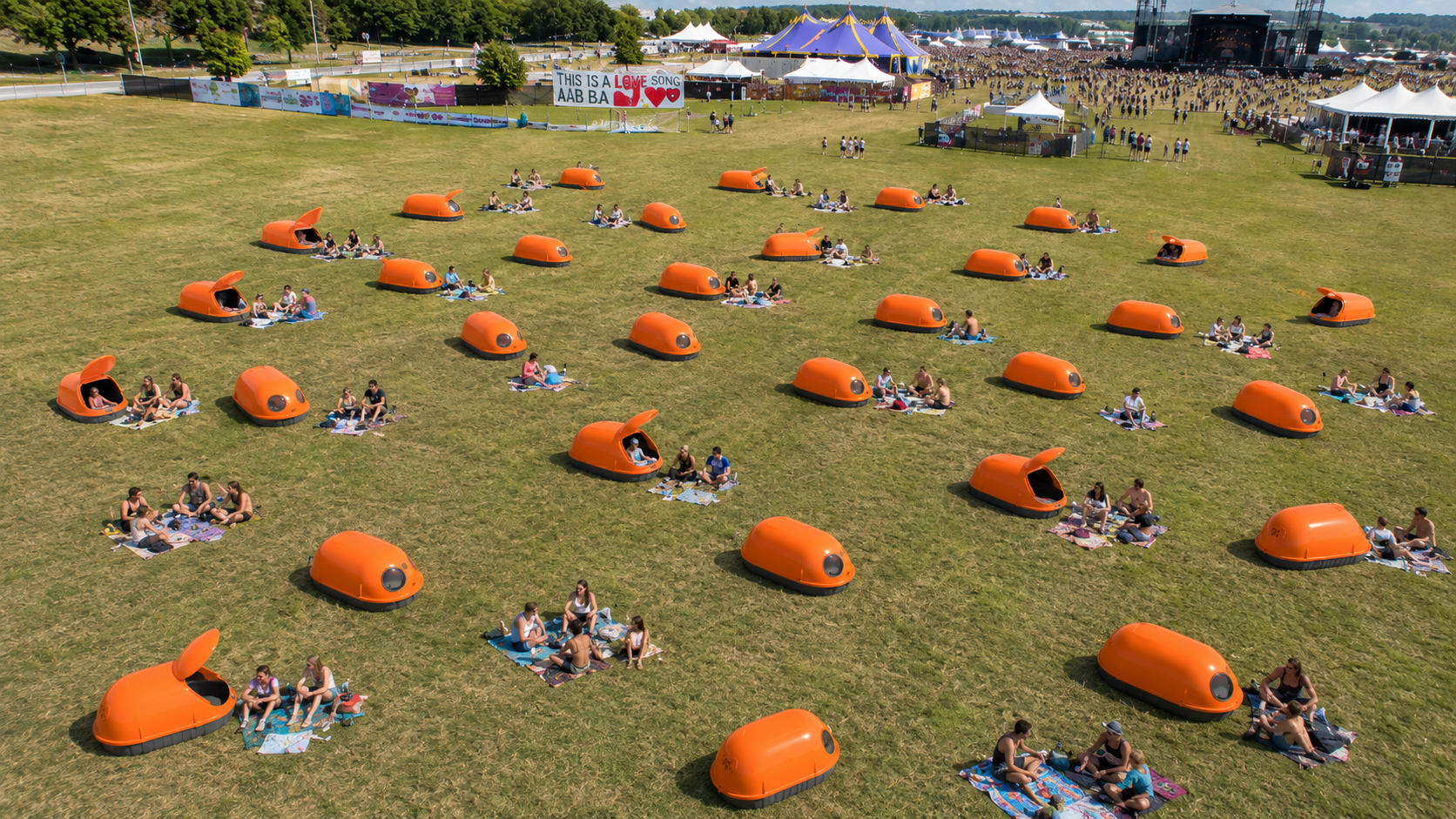
SleepPod festival stay ecosystem
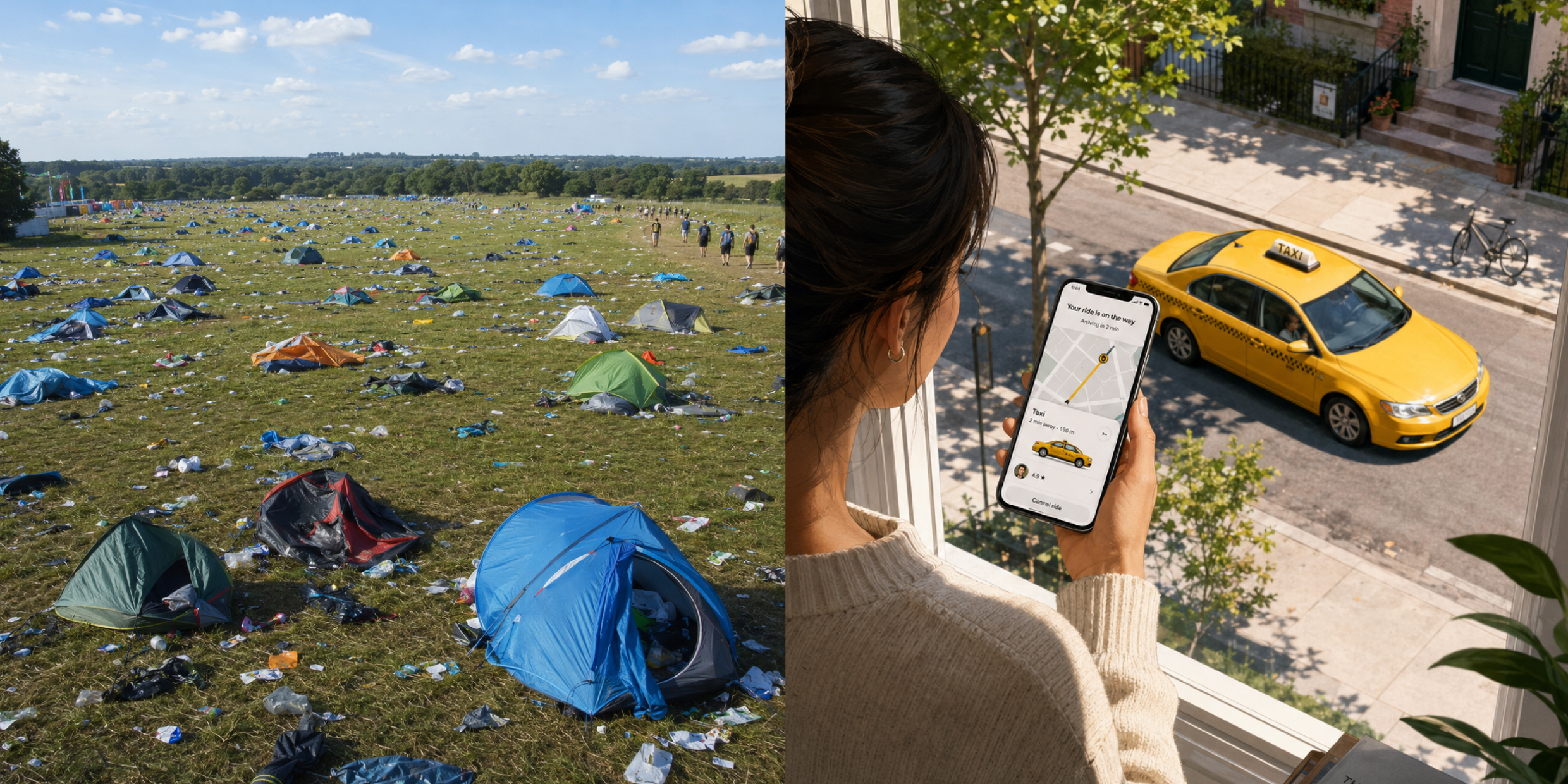
The SleepPod ecosystem originated as a student project at Saxion University of Applied Sciences in Deventer, where Bram Ploeg, Nayaro Hommersom and Kelvin van Horck began exploring more sustainable alternatives to disposable festival camping. As the project progressed, the students involved Bordex Packaging, bringing additional industry knowledge, experience and support into the project. I subsequently became involved to connect the research with the design process. The broader question within the project became: how could we shift festival camping from ownership and waste towards access, reuse and service? The research identified sustainability, convenience, comfort and safety as key elements of the proposition.
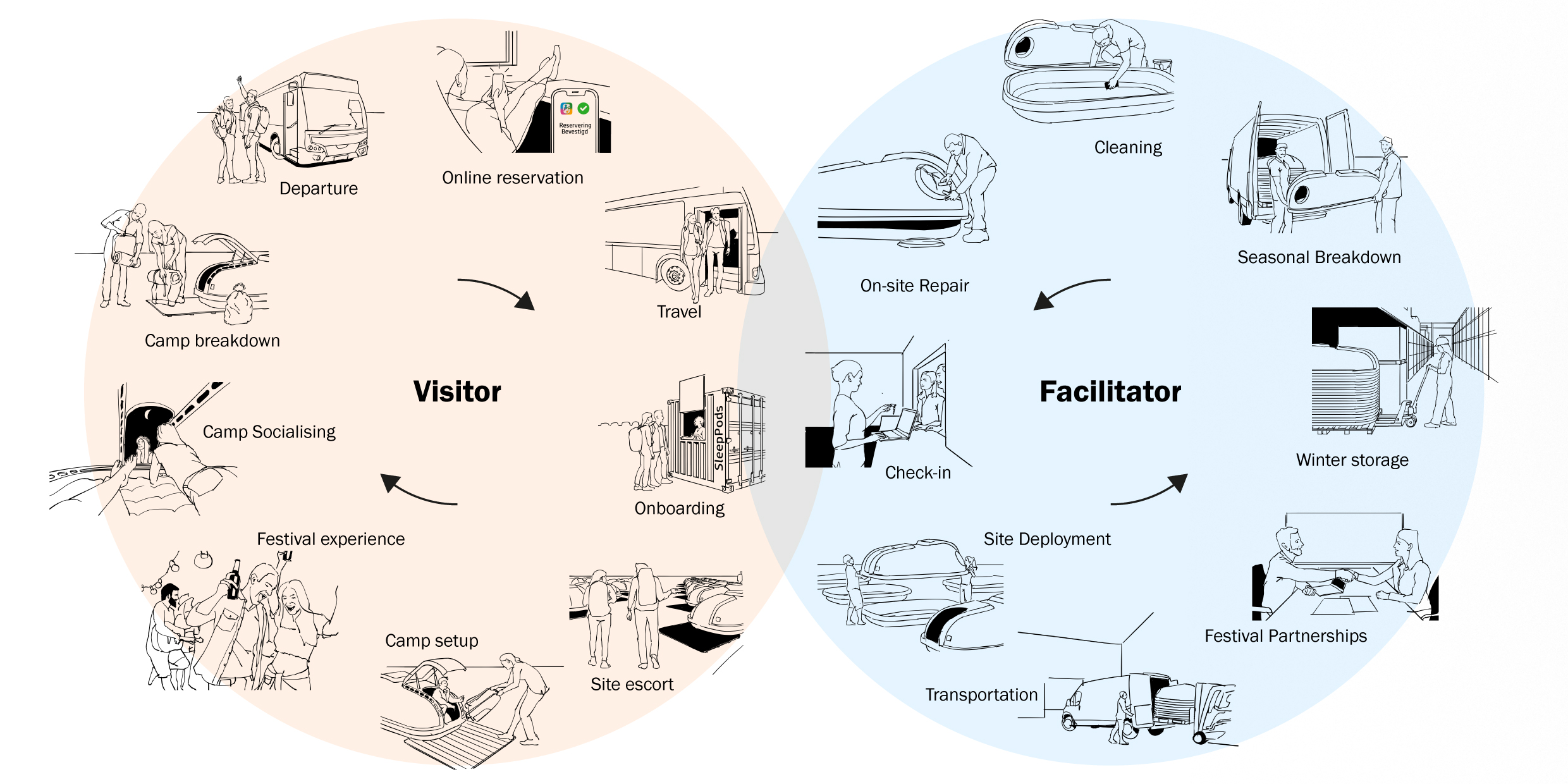
We began by looking at how festival visitors plan, book, travel, stay and leave, alongside the operational cycle of those facilitating the campsite. One important insight was that the target group is already accustomed to accessing services rather than owning the means behind them: from shared bikes and Uber to food delivery. This made an online booking model a natural part of the concept. Instead of buying, transporting and eventually discarding a tent, visitors could reserve a ready-to-use place to stay.
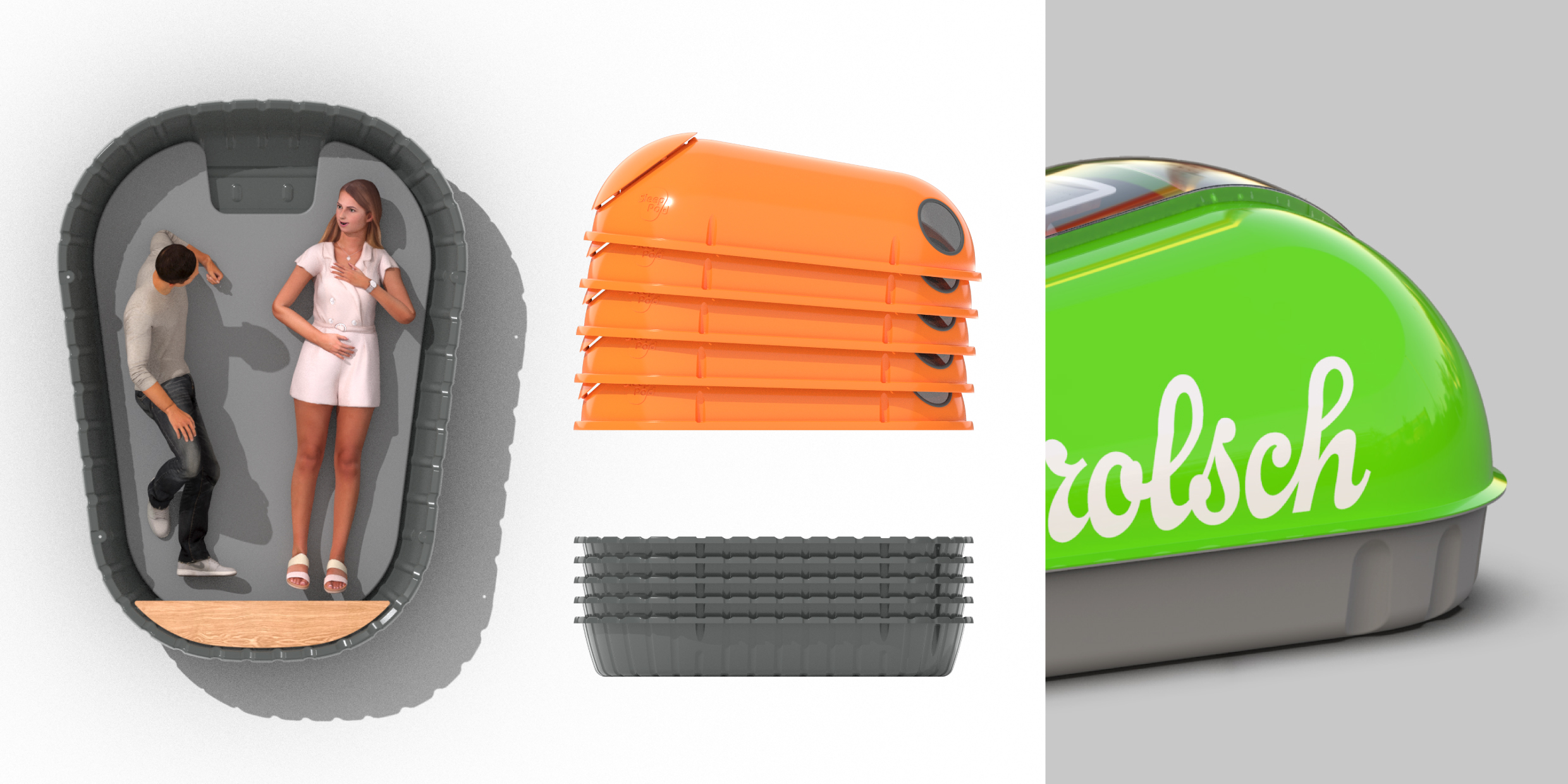
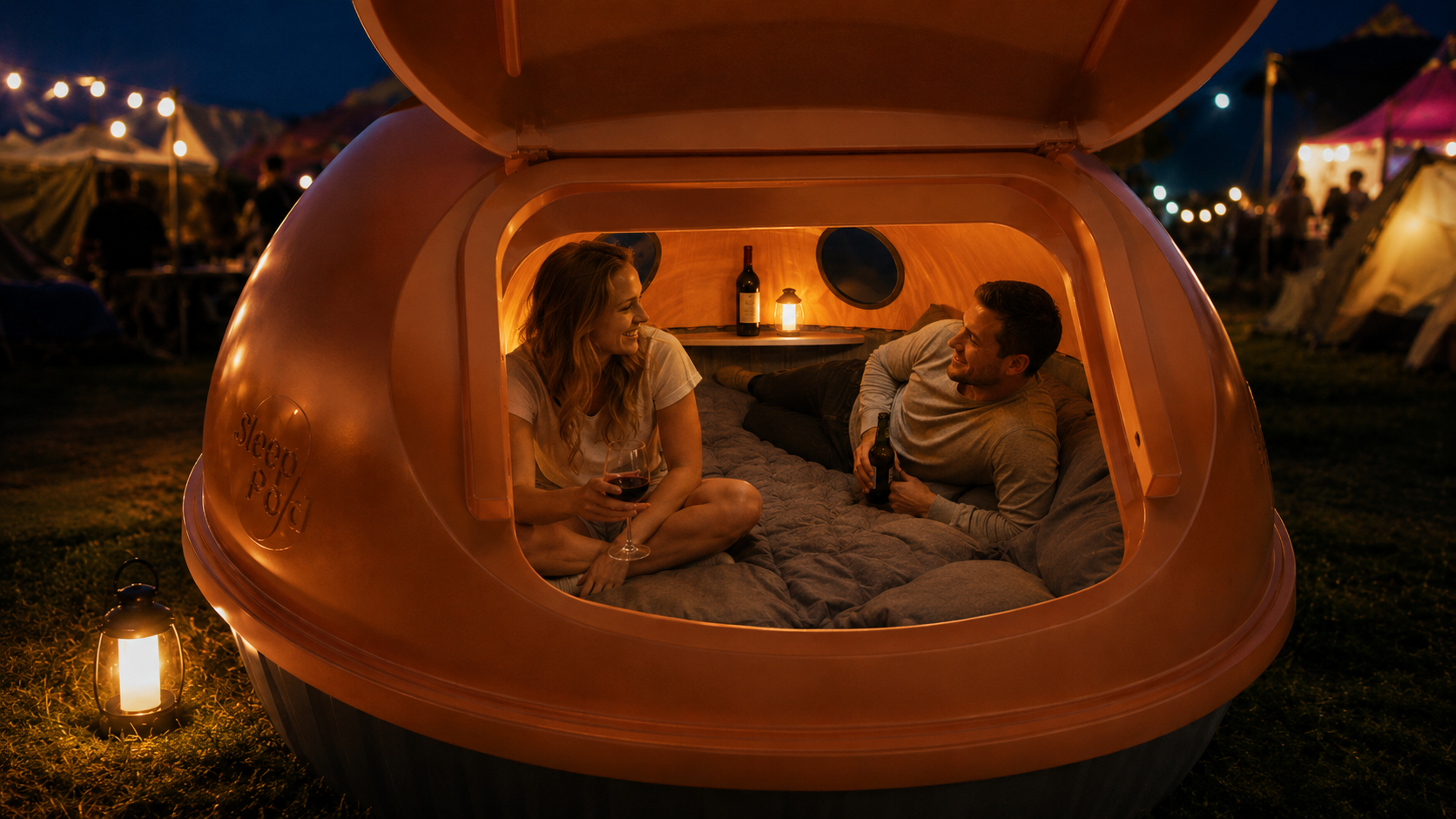
The SleepPod therefore became more than a place to sleep. It also had to support the social experience around the pod, while providing ventilation, daylight, lighting and phone charging. At the same time, the facilitator’s needs were equally important. Because much of a pod’s lifecycle consists of handling, transport and storage, durability, stackability, repairability and efficient logistics became essential design criteria. Reuse and efficient use of campsite space were also identified as important strengths.
Bordex Packaging contributed valuable experience from the festival industry, including its work with circular systems around PET and PP drinking cups. By combining this industry knowledge with the students’ research and the needs of visitors, organisers, facilitators and suppliers, the SleepPod developed into more than a standalone product: a service proposition in which user experience, logistics, sustainability and commercial viability reinforce each other.
My role within the project was to translate the research and emerging opportunities into the design process: synthesising insights, mapping opportunities, guiding the creative development and developing the design of the SleepPod itself.
The stakeholders involved are still exploring whether SleepPod can be taken into a next phase, together with potential partners, investors and industry specialists. The ambition remains to turn the proposition into a viable part of the festival ecosystem: one that makes a better experience possible while reducing the waste associated with today’s disposable festival camping.
Interested in how this experience could support your product challenge?