
An Inox Ecosystem
Front-end innovation rarely follows a predictable path. New insights can shift a project’s direction, requiring teams to stay open and make decisions without knowing exactly where the process will lead. Inox 360 is a good example of how trust, collaboration and adaptability can turn such a shift into a stronger solution.
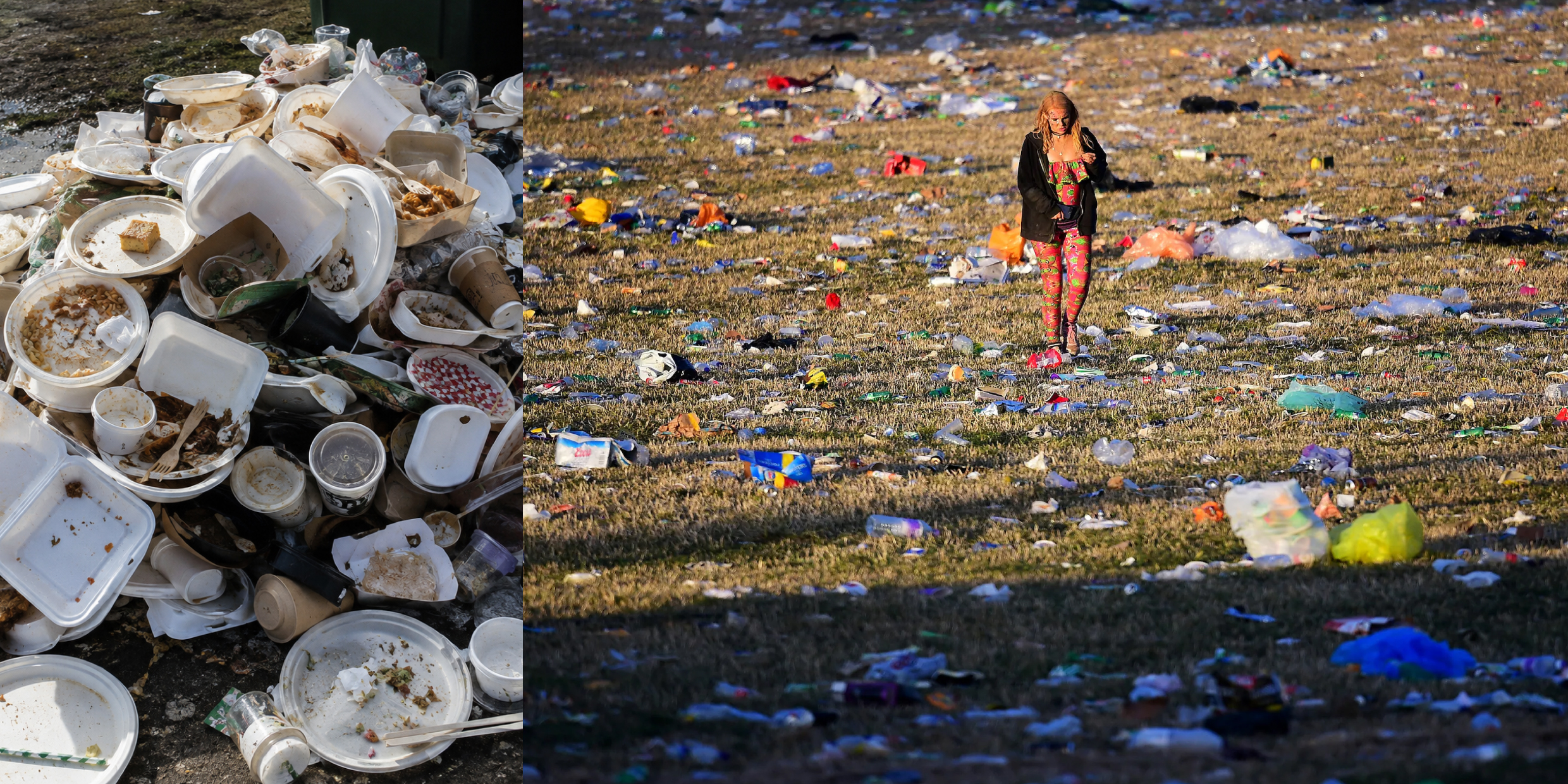
Inox 360 grew out of a long-standing collaboration with Bordex Packaging. Together, we had already developed circular concepts such as Revent, PP360 and PET360, exploring the full cycle of festival drinking cups: from use and collection to cleaning, reuse and recycling. But cups were only part of the waste stream. Plates, trays, bowls and cutlery also generate substantial waste and demand a different material and product strategy.
It soon became clear that this challenge could not be solved by a manufacturer alone. We mapped the full ecosystem around the products: caterers, producers, transporters, cleaning partners, festival organisers and end users. Understanding their roles, behaviour and needs helped us identify where design could improve both the products and the system around them.
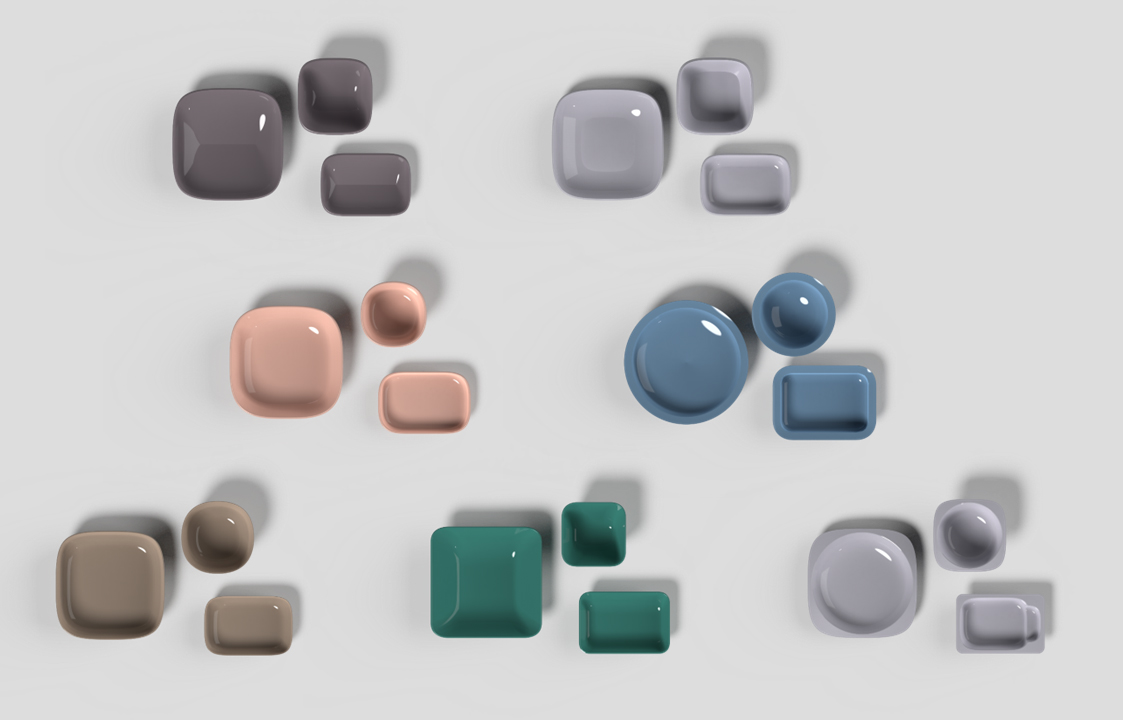
Our initial direction focused on a durable plastic that could withstand intensive use while still feeling refined and distinctive. We explored several design families, developed two strong directions into prototypes and tested them within the intended use cycle.
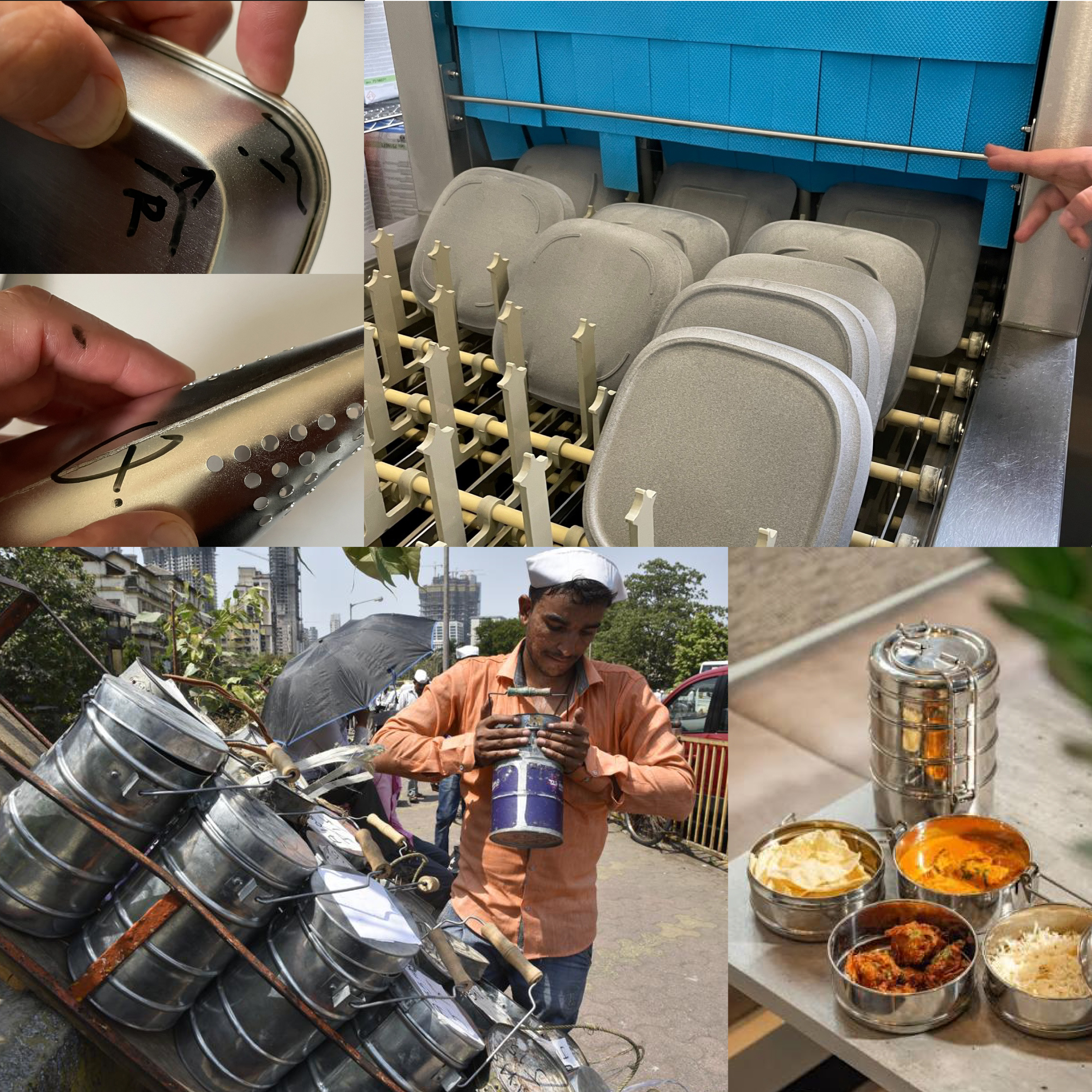
Those tests fundamentally changed the project. However carefully designed, a plastic plate covered in leftover food still looked and felt disposable, making return less intuitive for festival visitors. Plastic also showed limitations in industrial washing and drying. Stainless steel gradually emerged as an alternative: and ultimately changed the direction of Inox 360.
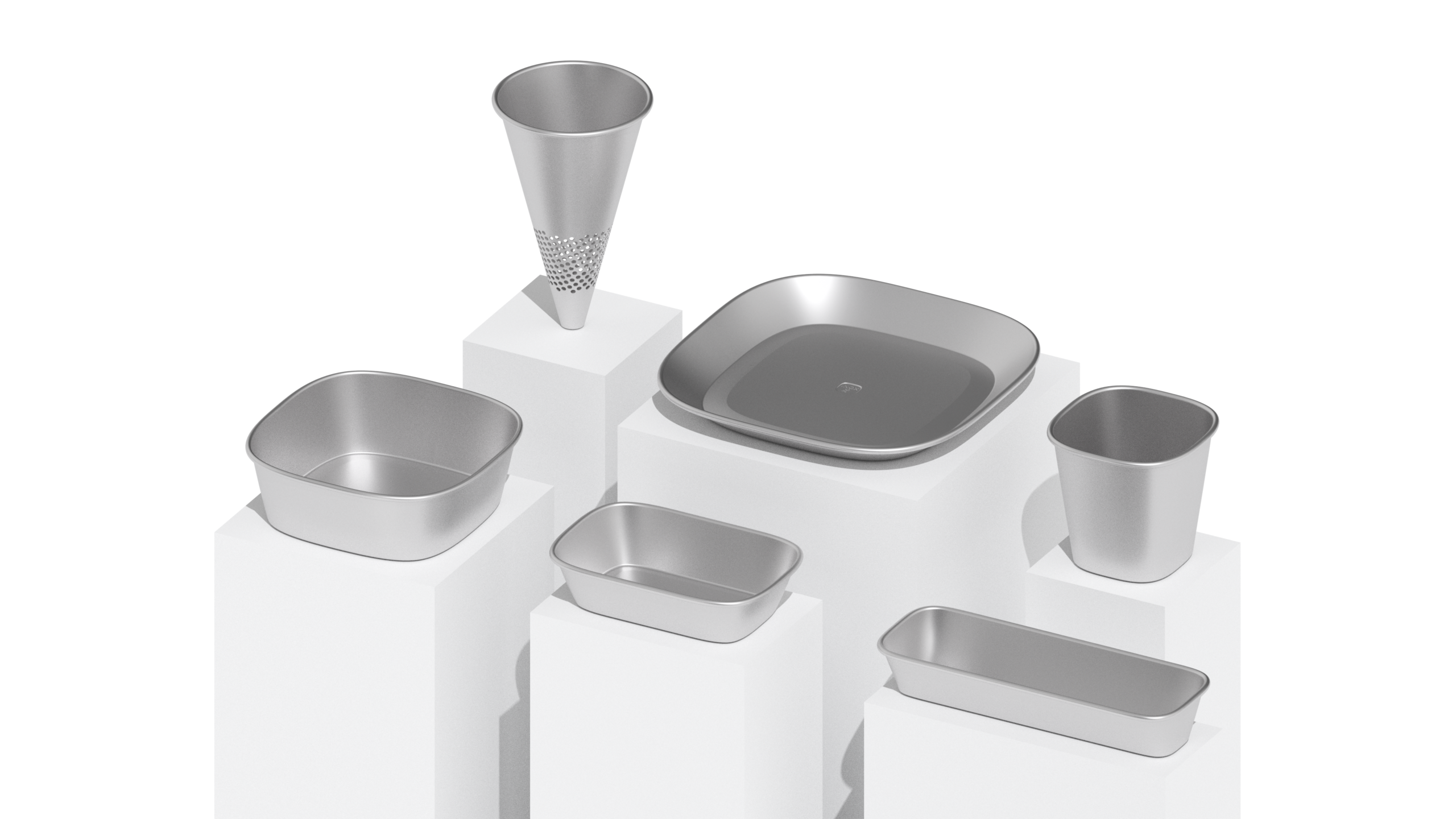
The switch affected manufacturing, cost, technical detailing and the design language itself. Inspiration came from India’s dabbawala system, where meals are transported through an efficient network using simple, durable and stackable containers. We translated that principle into a refined family of plates, trays and bowls that work individually and stack efficiently as one coherent system.
Throughout development, key stakeholders remained involved and a specialised stainless-steel manufacturer joined the project. Together with Bordex, the Inox 360 range was developed through to first production parts. Different scenarios are now being explored for further development, implementation and potential market introduction.
Interested in how this experience could support your product challenge?